Lecture 17
Class Survey Results vs. Professional Consensus: Pre- and Post-Course Comparison
December 8, 2025
💵 Carbon Markets and Carbon Offsets
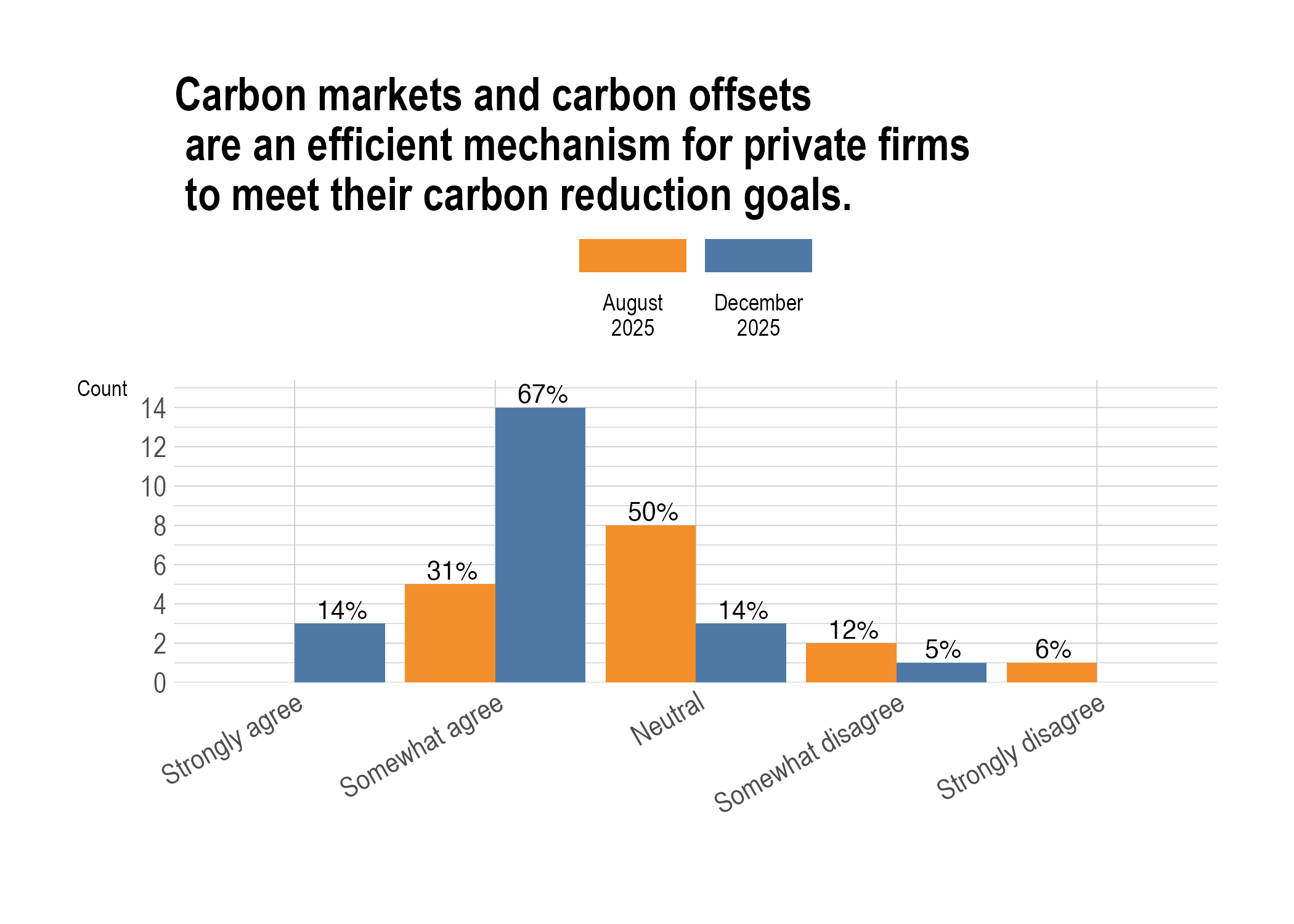
Professional Economists (2023): 56.84% agree
- Class Support:
- Pre-Course: 31%
- Post-Course: 81%
- Pre-Course: 31%
- Change: +50% points → strong convergence toward market-based GHG regulation
♻️ Recycling Carbon Revenues
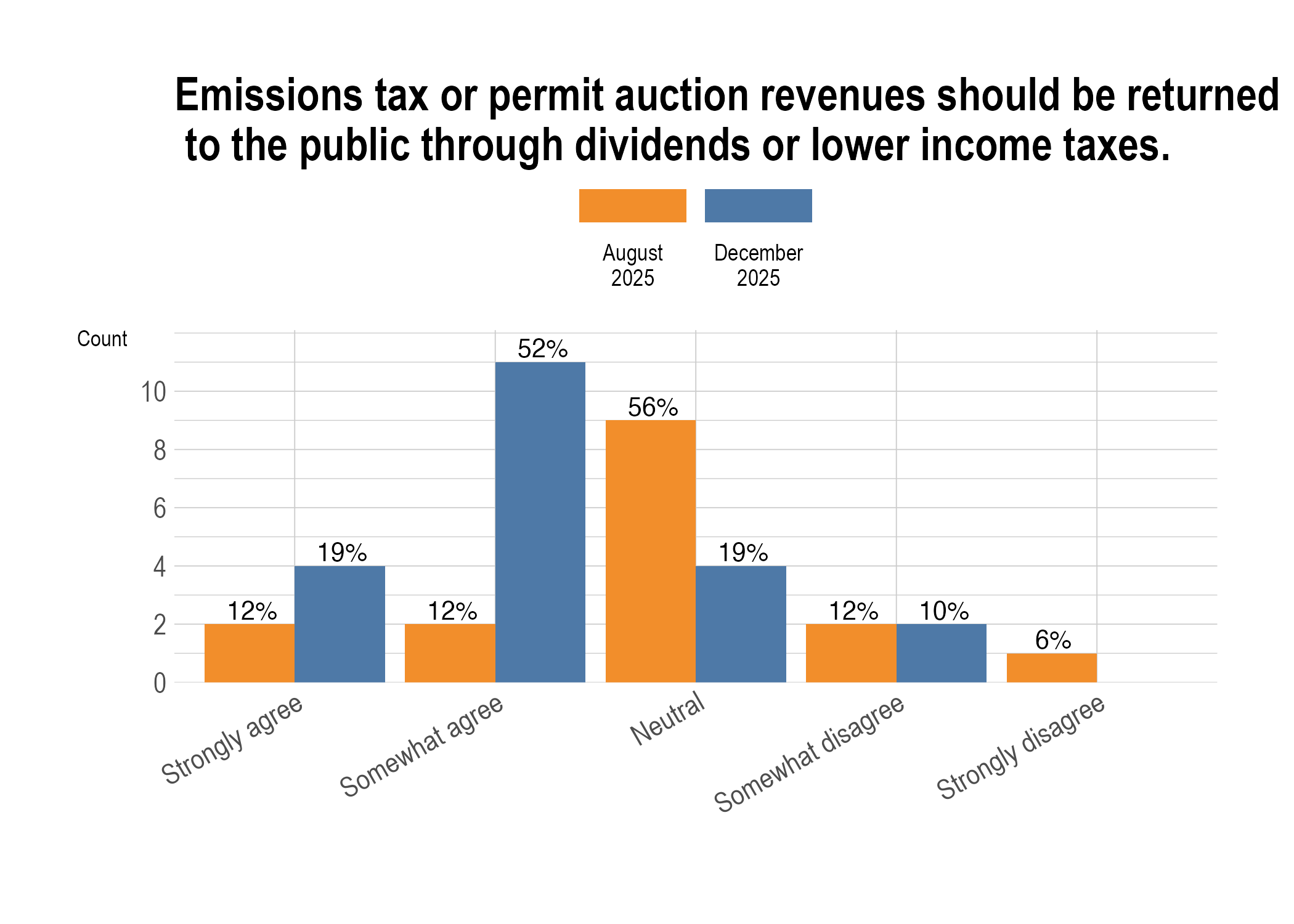
Professional Economists (2023): 55.5% agree
- Class Support:
- Pre-Course: 24%
- Post-Course: 71%
- Pre-Course: 24%
- Change: +47% points → major shift toward revenue-recycling policy
🌍 Carbon Border Adjustment Mechanism (CBAM)
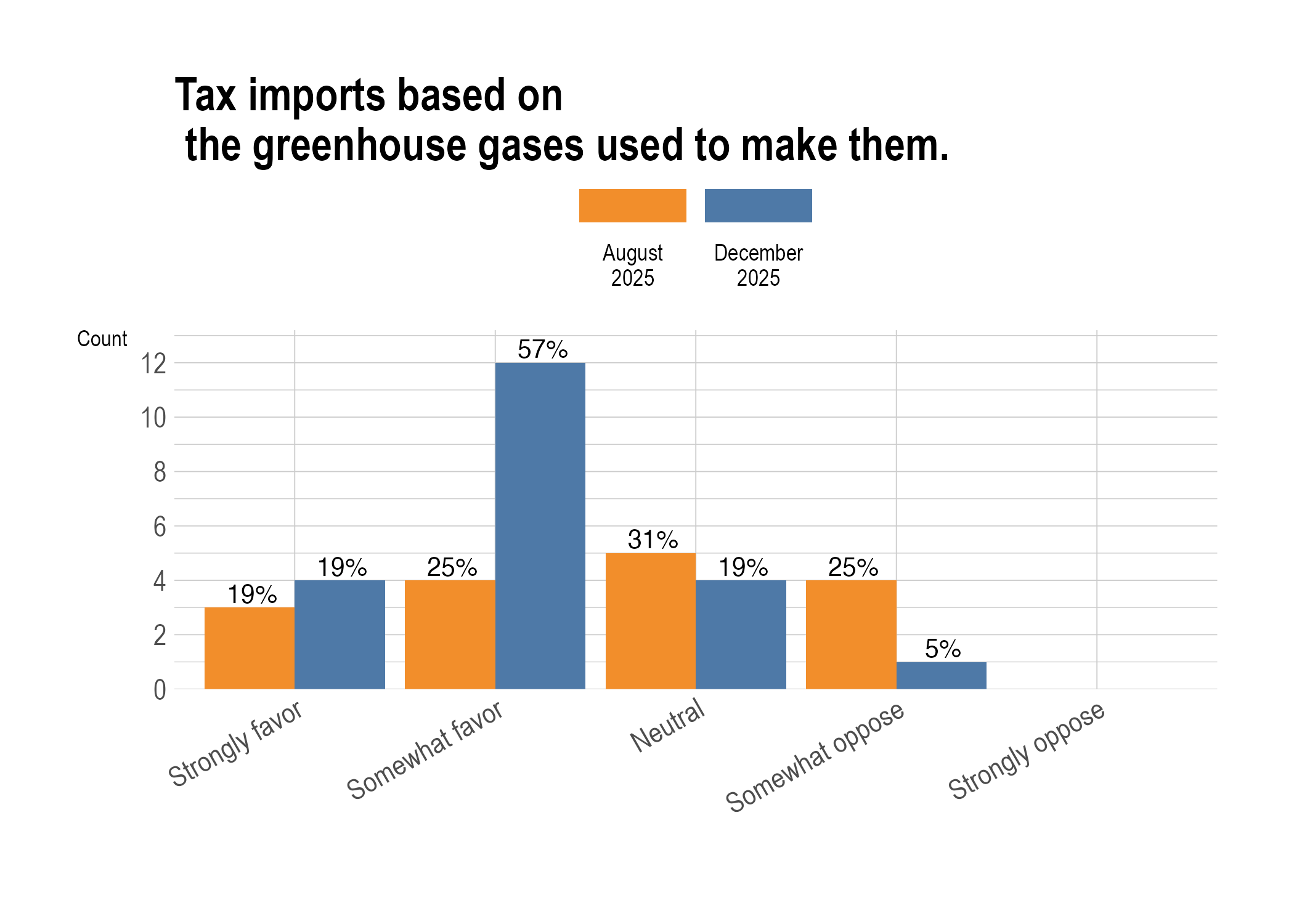
Professional Economists (2023): 67.72% favor
- Class Support:
- Pre-Course: 44%
- Post-Course: 76%
- Pre-Course: 44%
- Change: +32% points → increased awareness of carbon leakage and trade policy
📈 Limits to Economic Growth
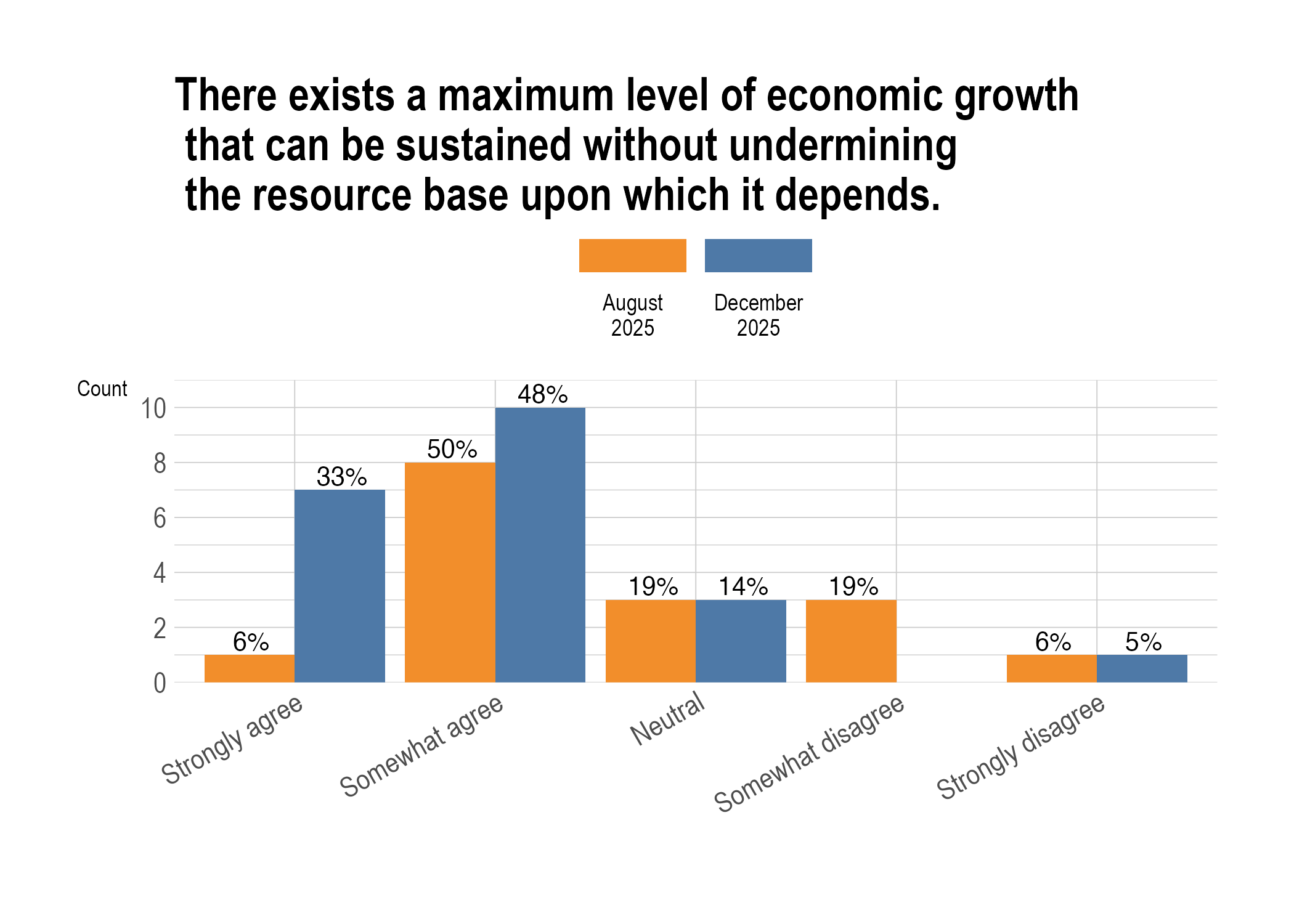
Professional Economists (2023): 44.21% agree
- Class Support:
- Pre-Course: 56%
- Post-Course: 81%
- Pre-Course: 56%
- Change: +25% points → increased awareness of long-run growth limits under climate change
🏠⚡ Home Clean-Energy Tax Credits
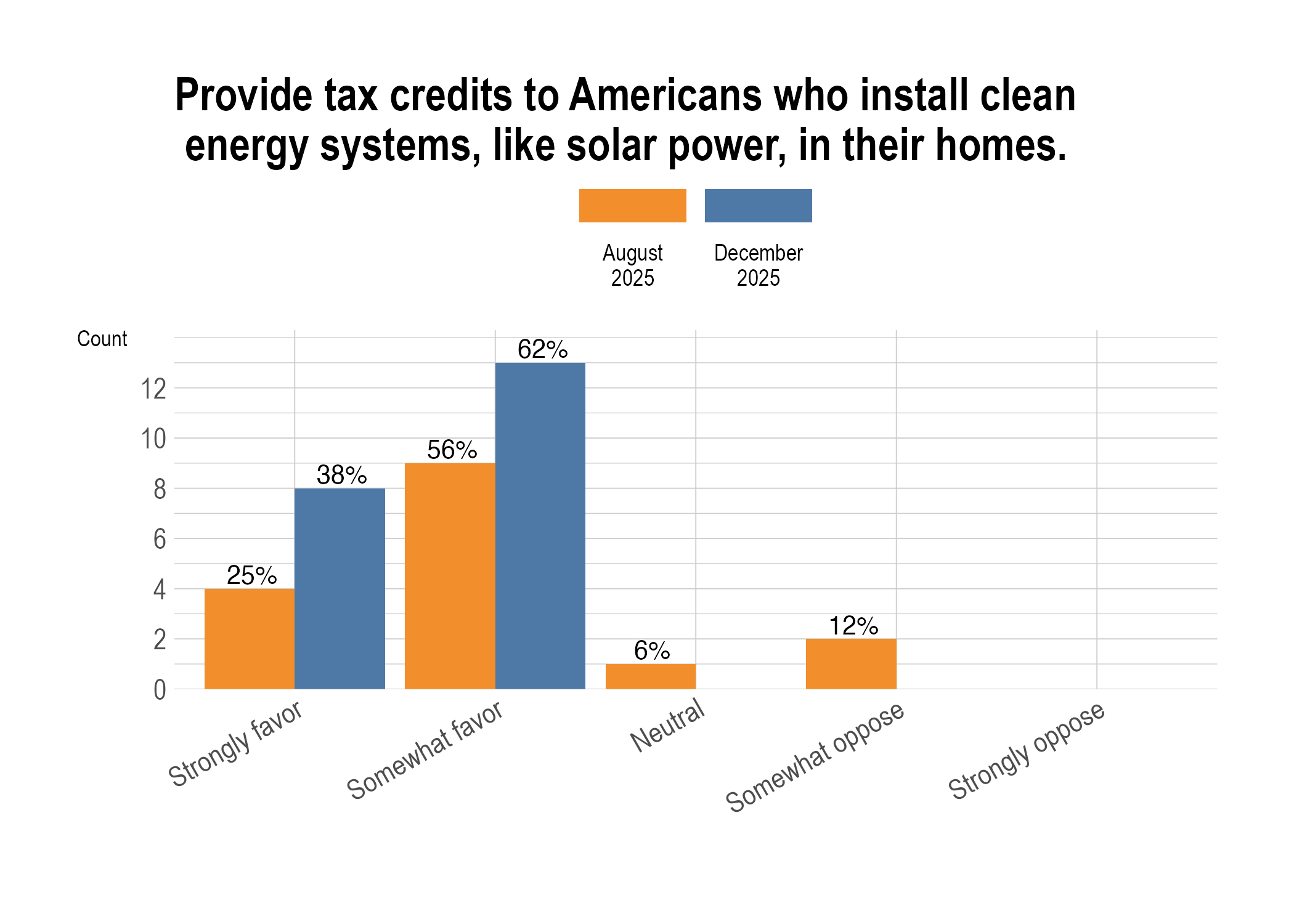
Professional Economists (2023): 61.26% favor
- Class Support:
- Pre-Course: 81%
- Post-Course: 100%
- Pre-Course: 81%
- Change: +19% points → unanimous post-course support
🏛️ EPA Regulatory Authority
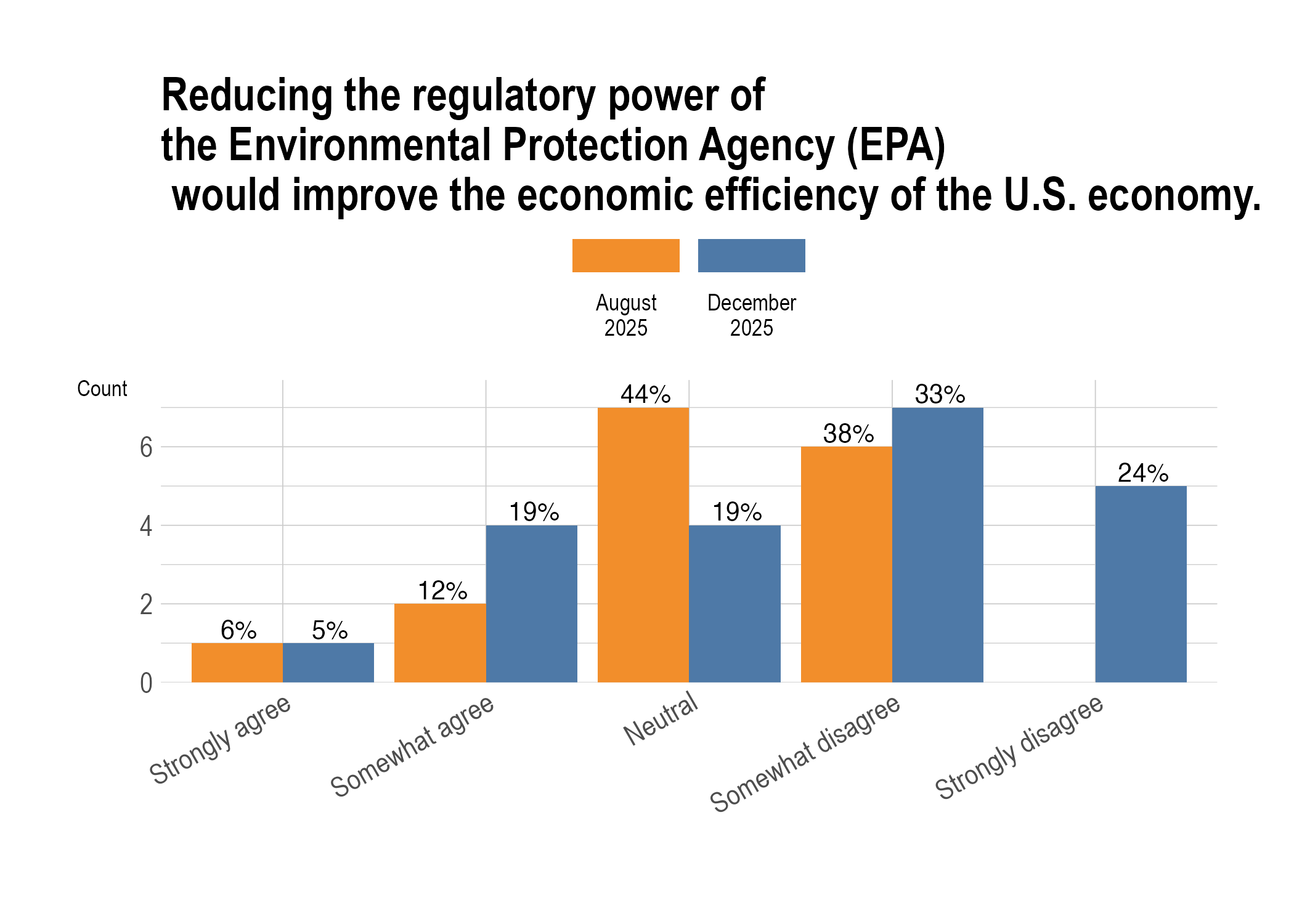
Professional Economists (2023): 80.63% disagree
- Class Disagreement:
- Pre-Course: 38%
- Post-Course: 57%
- Pre-Course: 38%
- Change: +19% points → Growing recognition that EPA regulation improves economic efficiency
Concern: Air quality
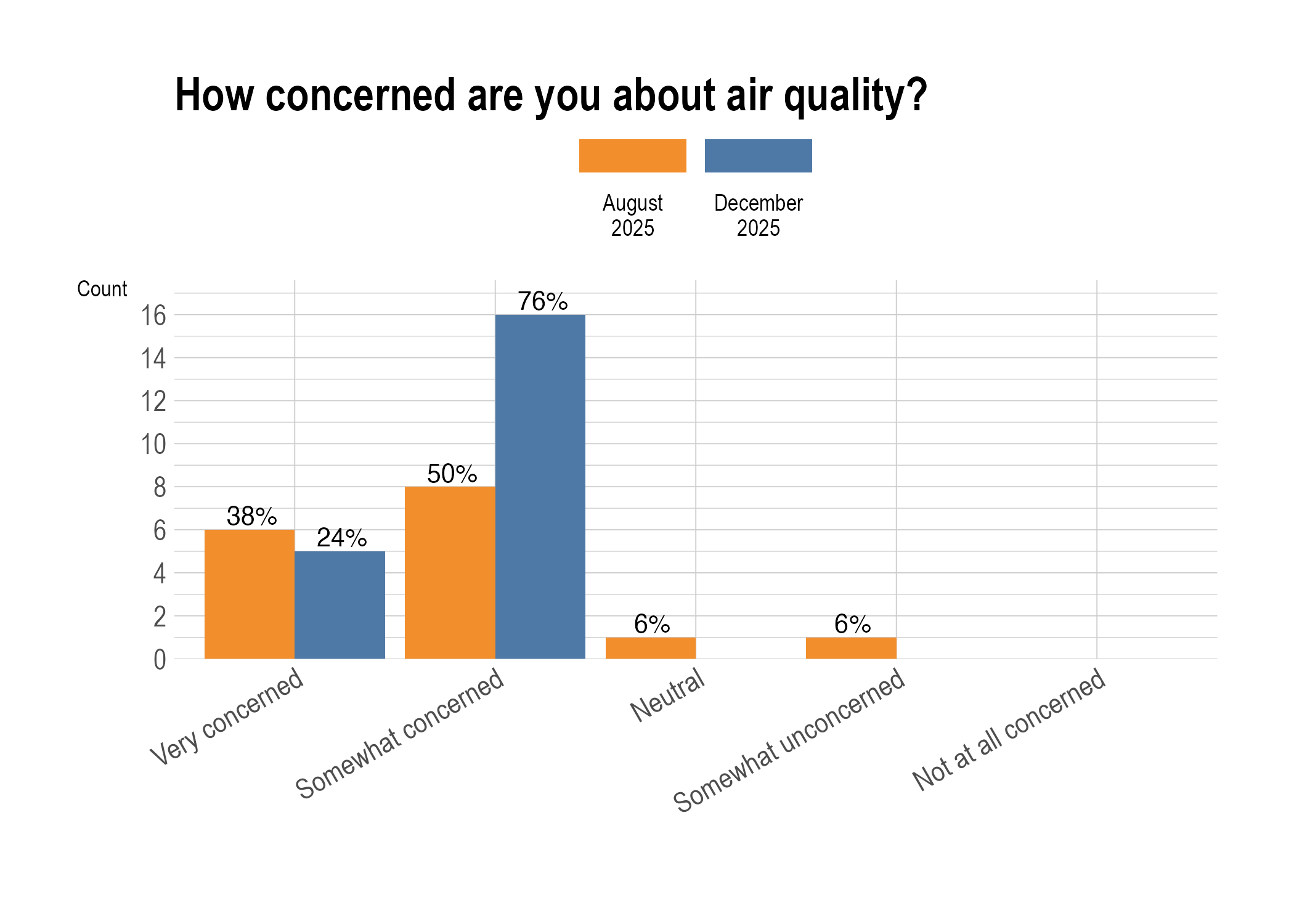
Economists: 57.14% concerned
- Before: Our class is 31% more concerned than professional economists.
- After: Our class is 46% more concerned than professional economists.
Concern: Environmental justice
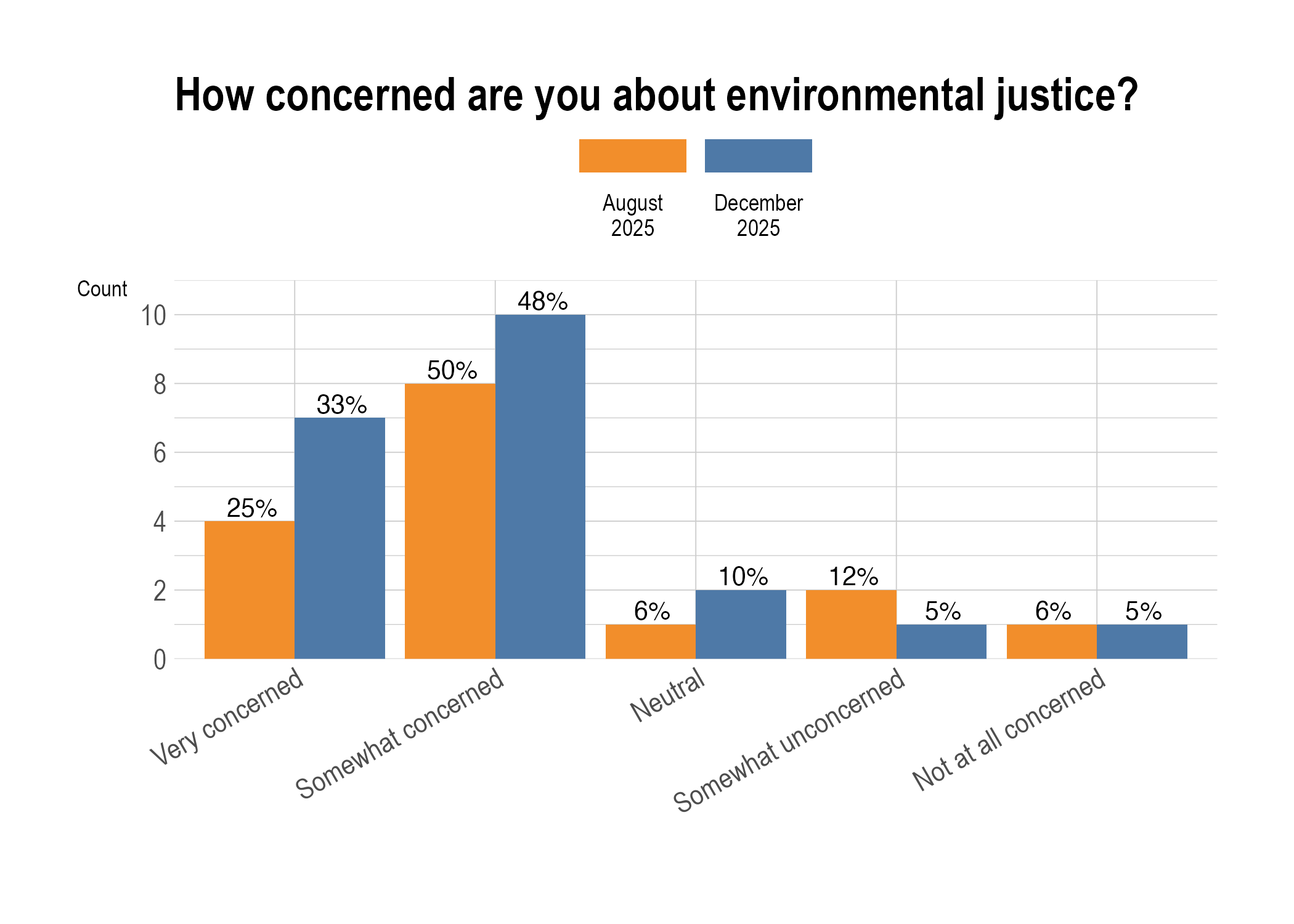
Economists: 53.97% concerned
- Before: Our class is 21% more concerned than professional economists.
- After: Our class is 27% more concerned than professional economists.
Concern: Renewable energy
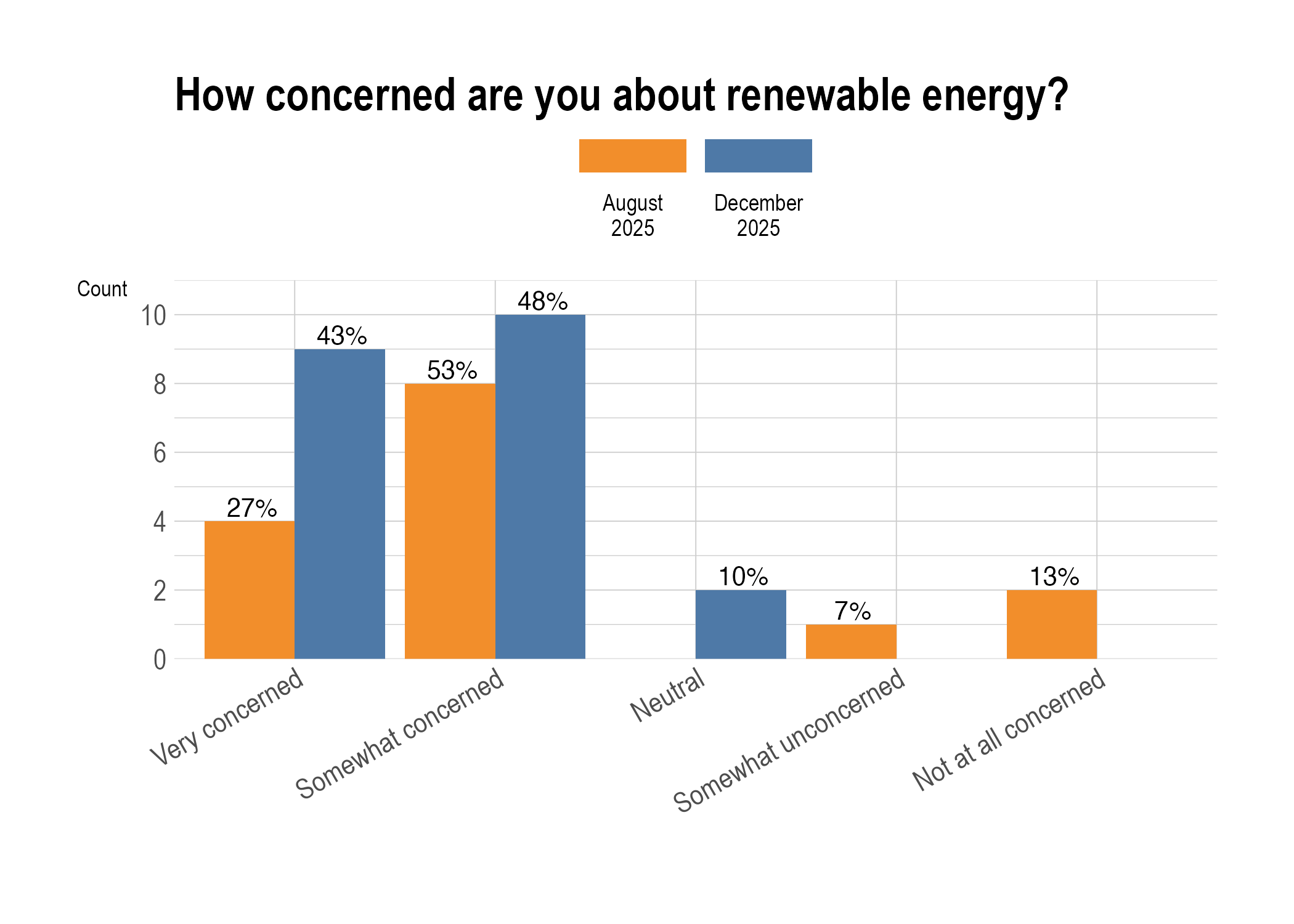
Economists: 45.21% concerned
- Before: Our class is 35% more concerned than professional economists.
- After: Our class is 46% more concerned than professional economists.
Concern: Mining impacts
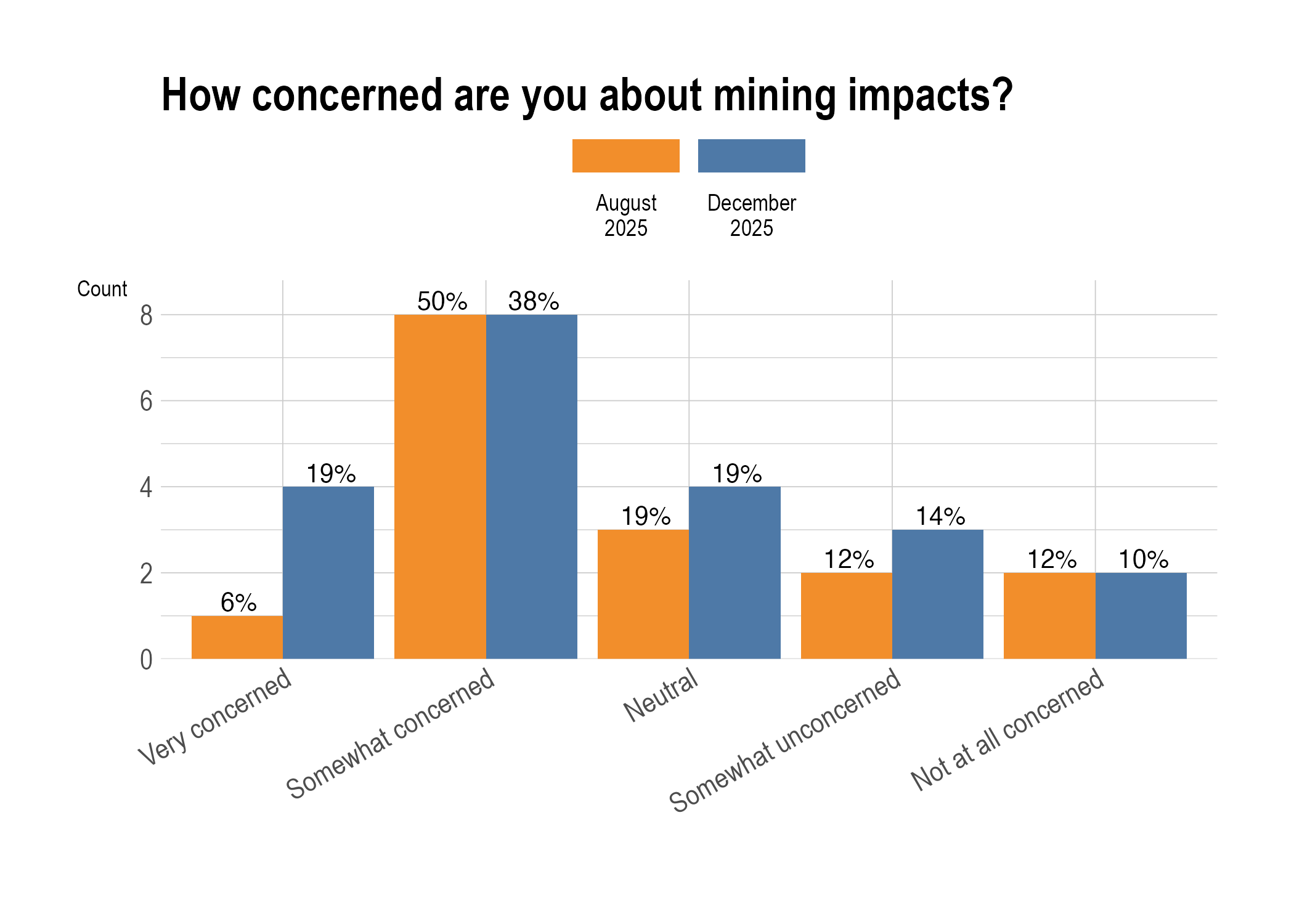
Economists: 40.64% concerned
- Before: Our class is 16% more concerned than professional economists.
- After: Our class is 17% more concerned than professional economists.
Concern: Solid waste
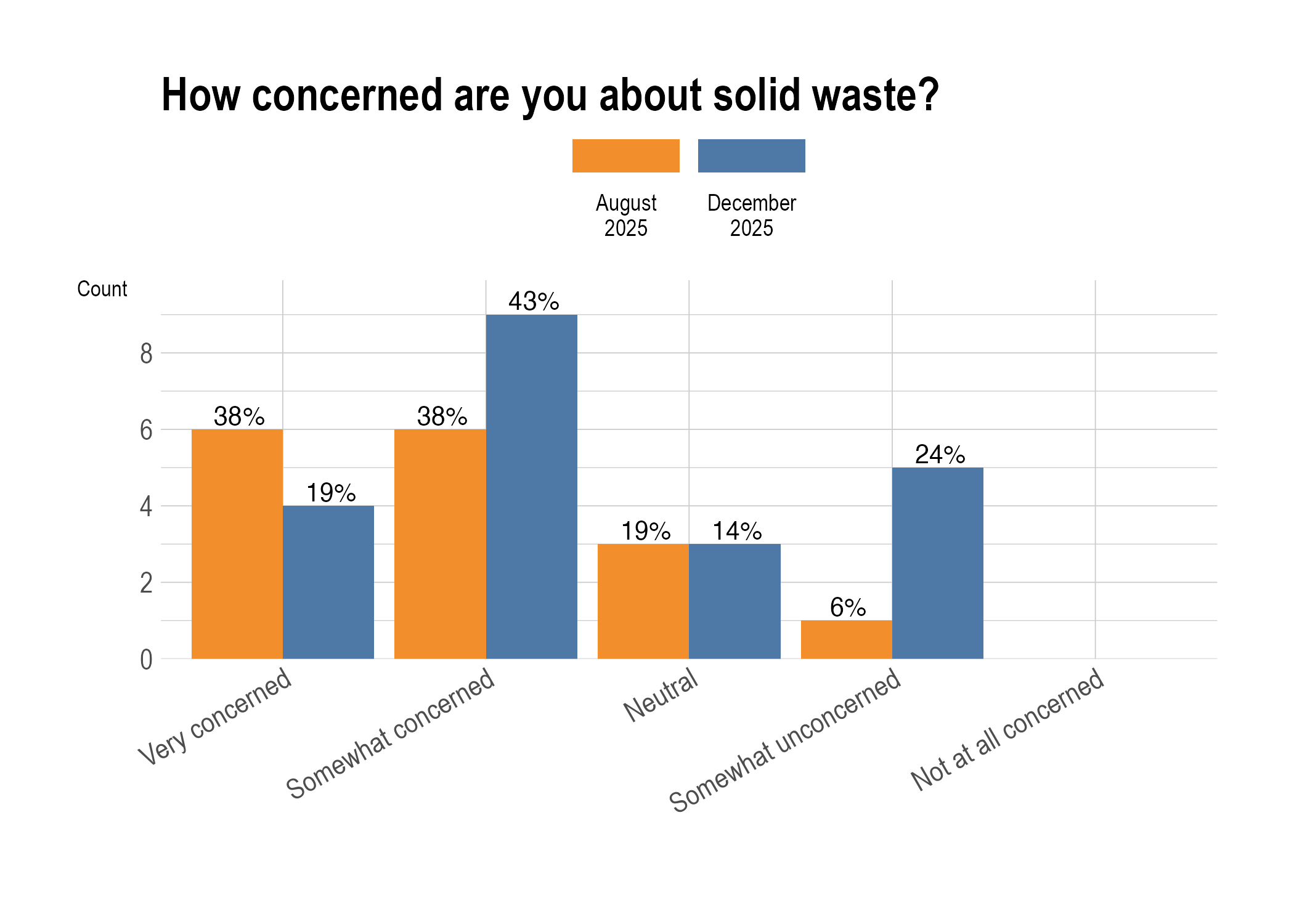
Economists: 39.46% unconcerned
- Before: Our class is 37% more concerned than professional economists.
- After: Our class is 23% more concerned than professional economists.
Concern: Hazardous waste
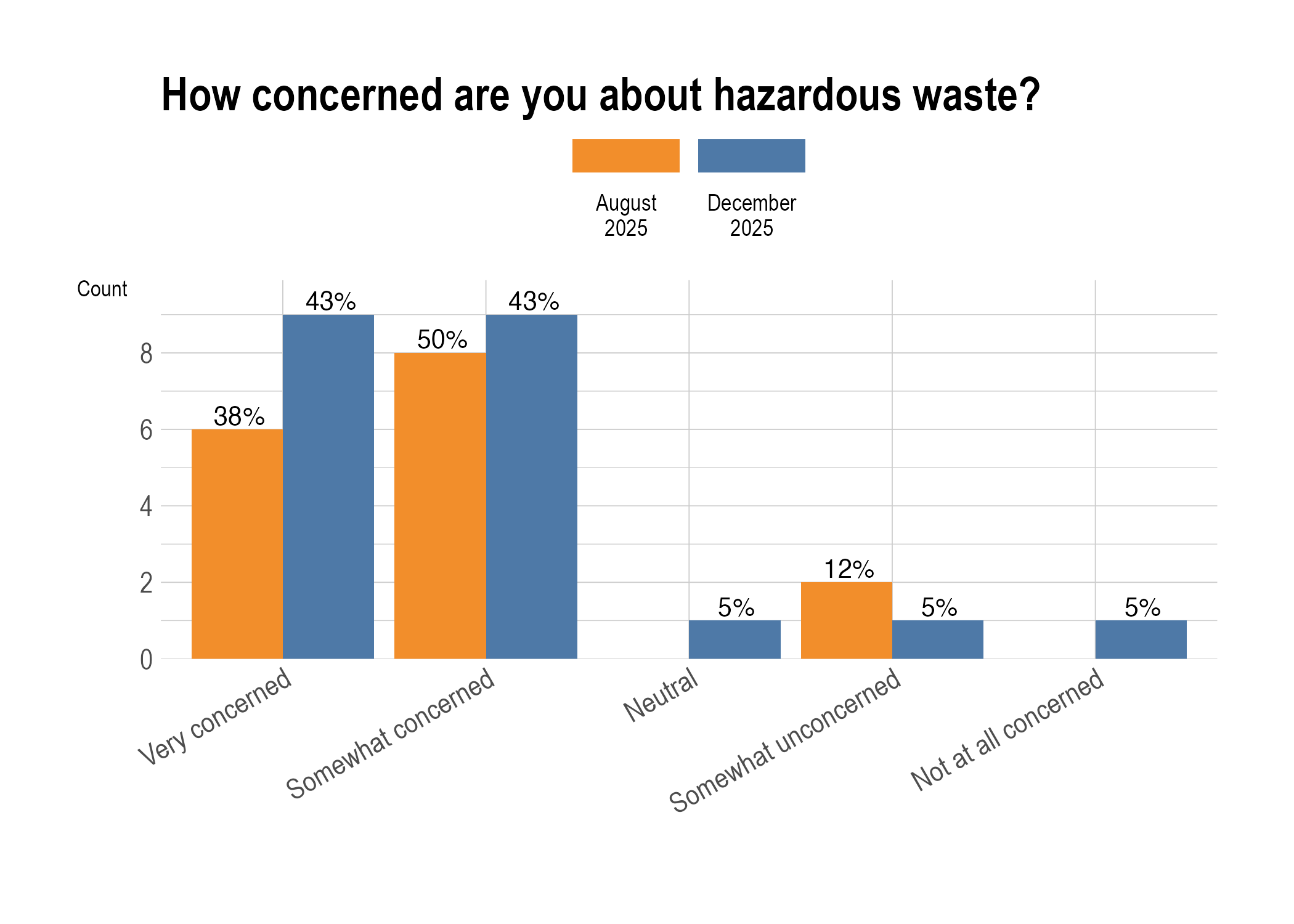
Economists: 38.38% neutral
- Before: Our class is 50% more concerned than professional economists.
- After: Our class is 48% more concerned than professional economists.
Policy Support: Methane limits (natural gas production)
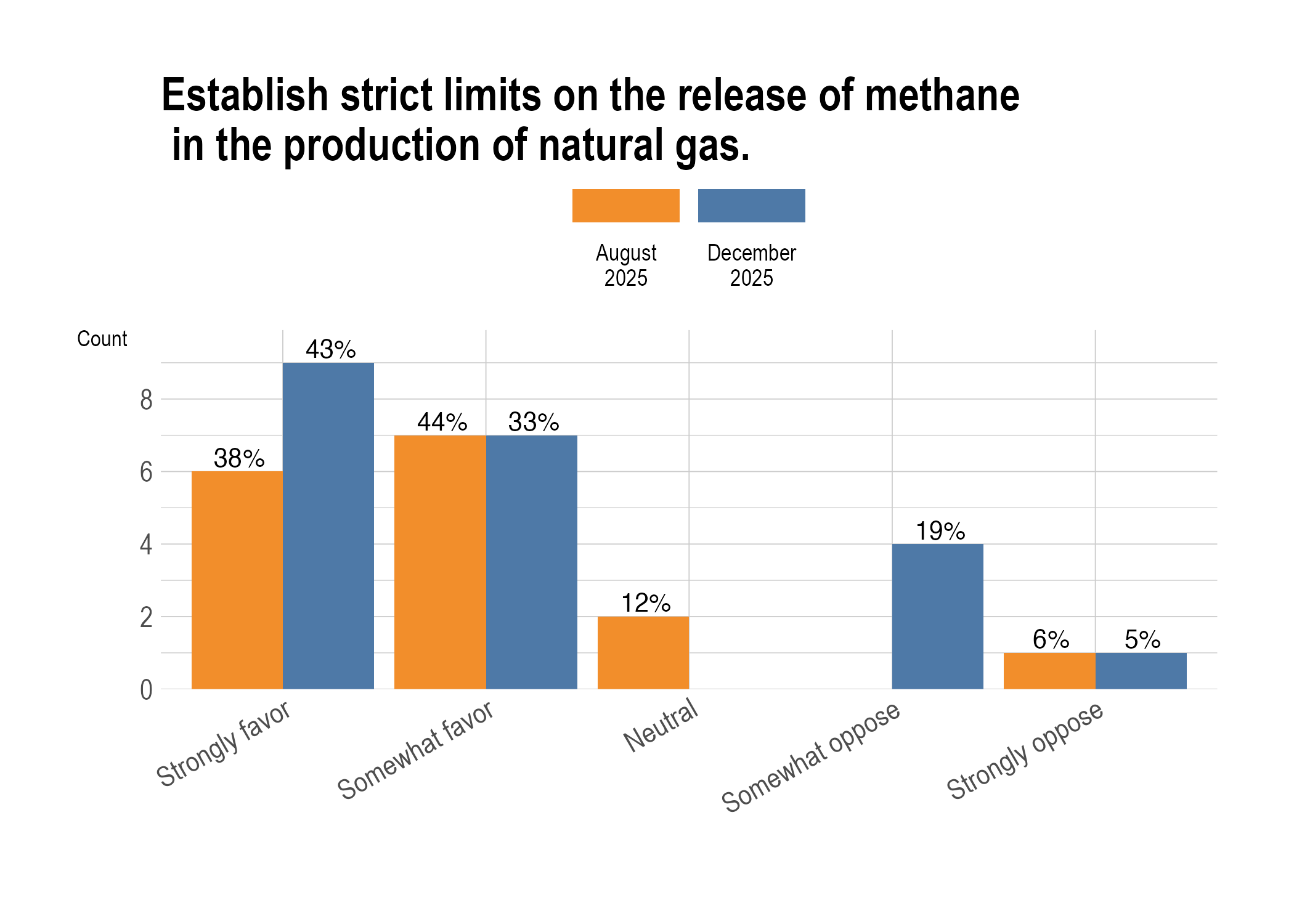
Economists: 75.39% favor
- Before: Our class is 7% more supportive than professional economists.
- After: Our class is as supportive as professional economists.
Policy Support: International agreements
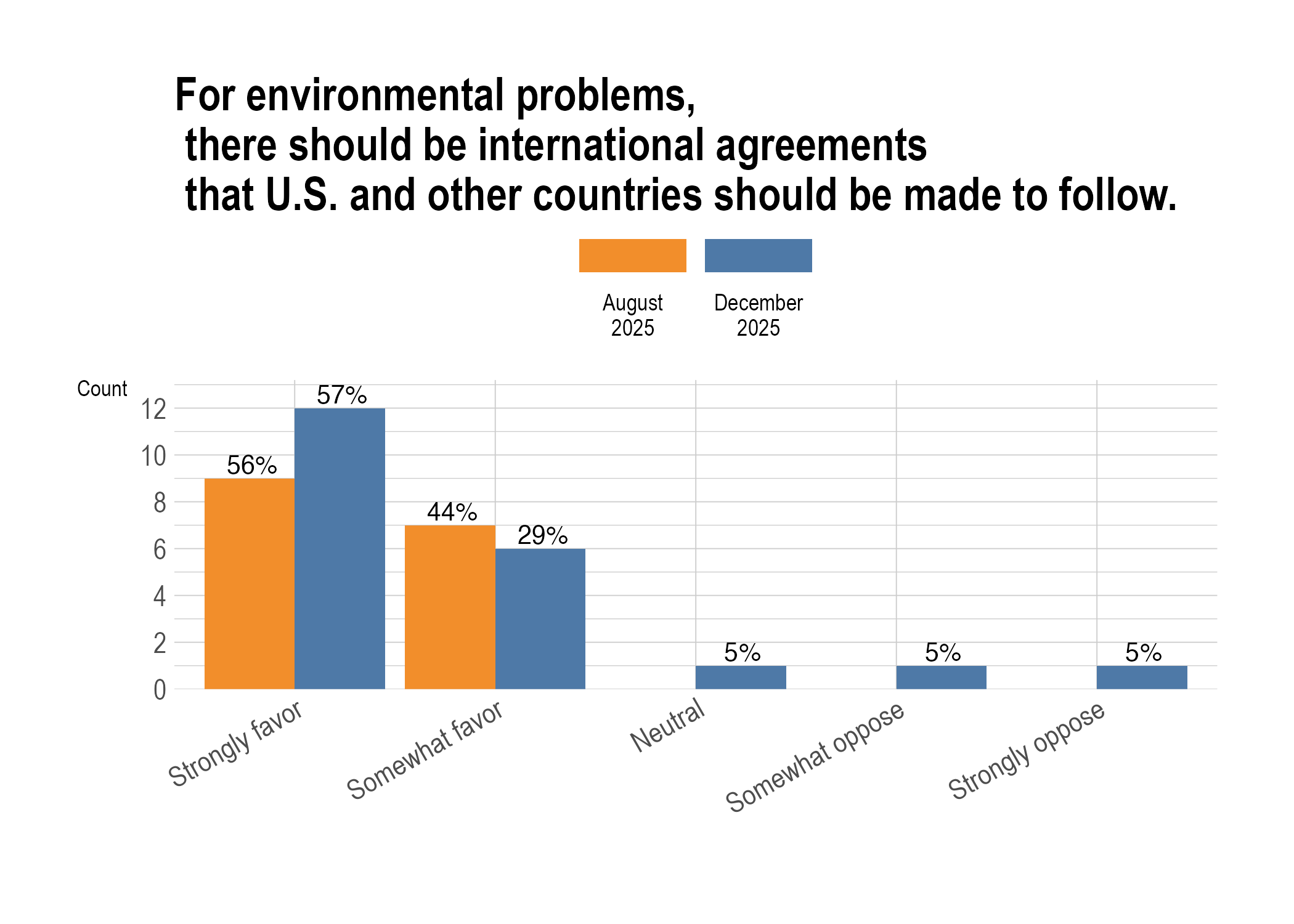
Economists: 74.35% favor
- Before: Our class is 26% more supportive than professional economists.
- After: Our class is 12% more supportive than professional economists.
Policy Support: EV charging stations (federal funding)
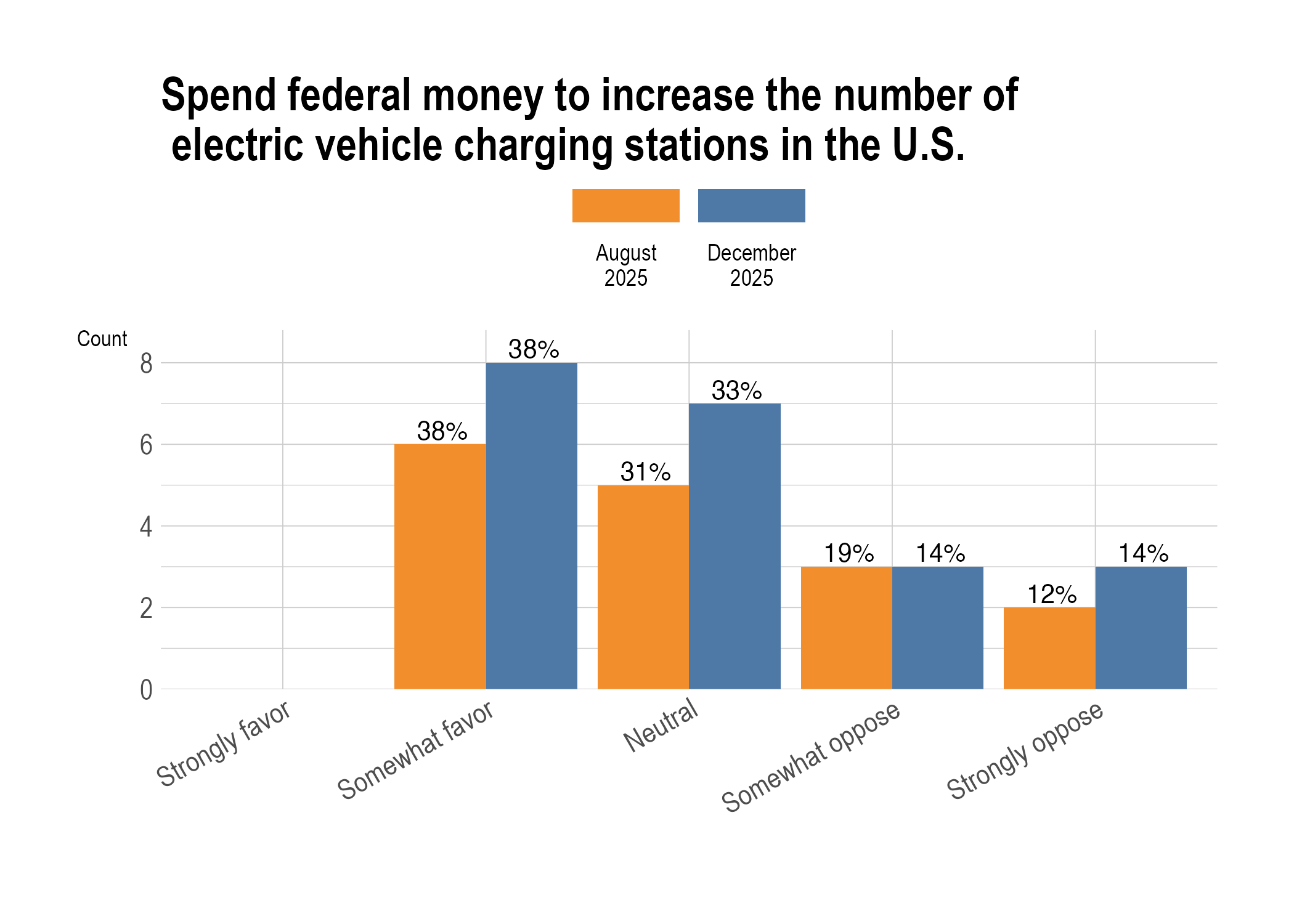
Economists: 68.95% favor
- Before: Our class is 31% less supportive than professional economists.
- After: Our class is 31% less supportive than professional economists.
Policy Support: Border carbon adjustment (tax imports by GHG)
Economists: 67.72% favor
- Before: Our class is 24% less supportive than professional economists.
- After: Our class is 9% more supportive than professional economists.
Policy Support: Higher fuel-efficiency standards
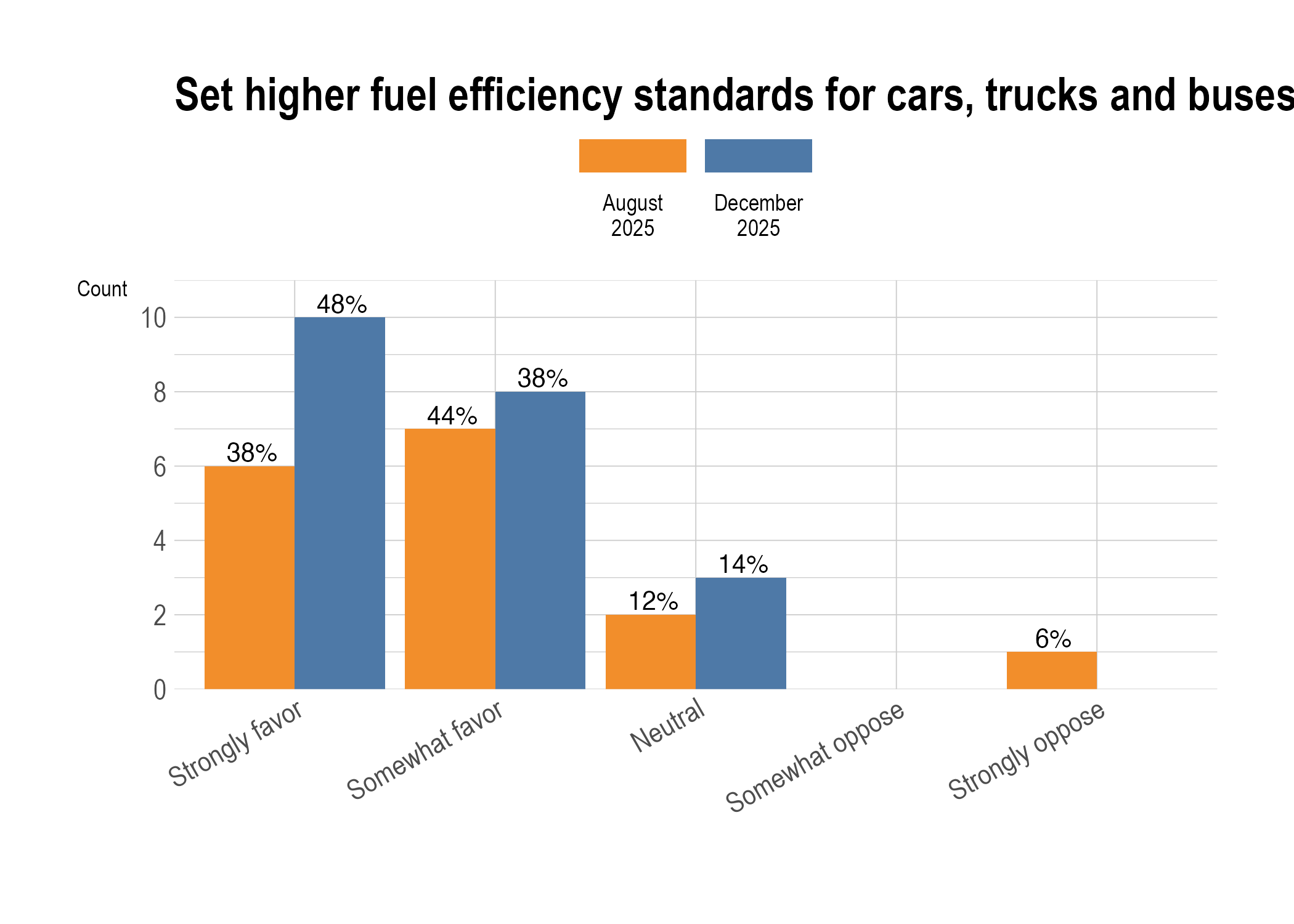
Economists: 66.84% favor
- Before: Our class is 15% more supportive than professional economists.
- After: Our class is 20% more supportive than professional economists.
Policy Support: Business incentives for clean energy
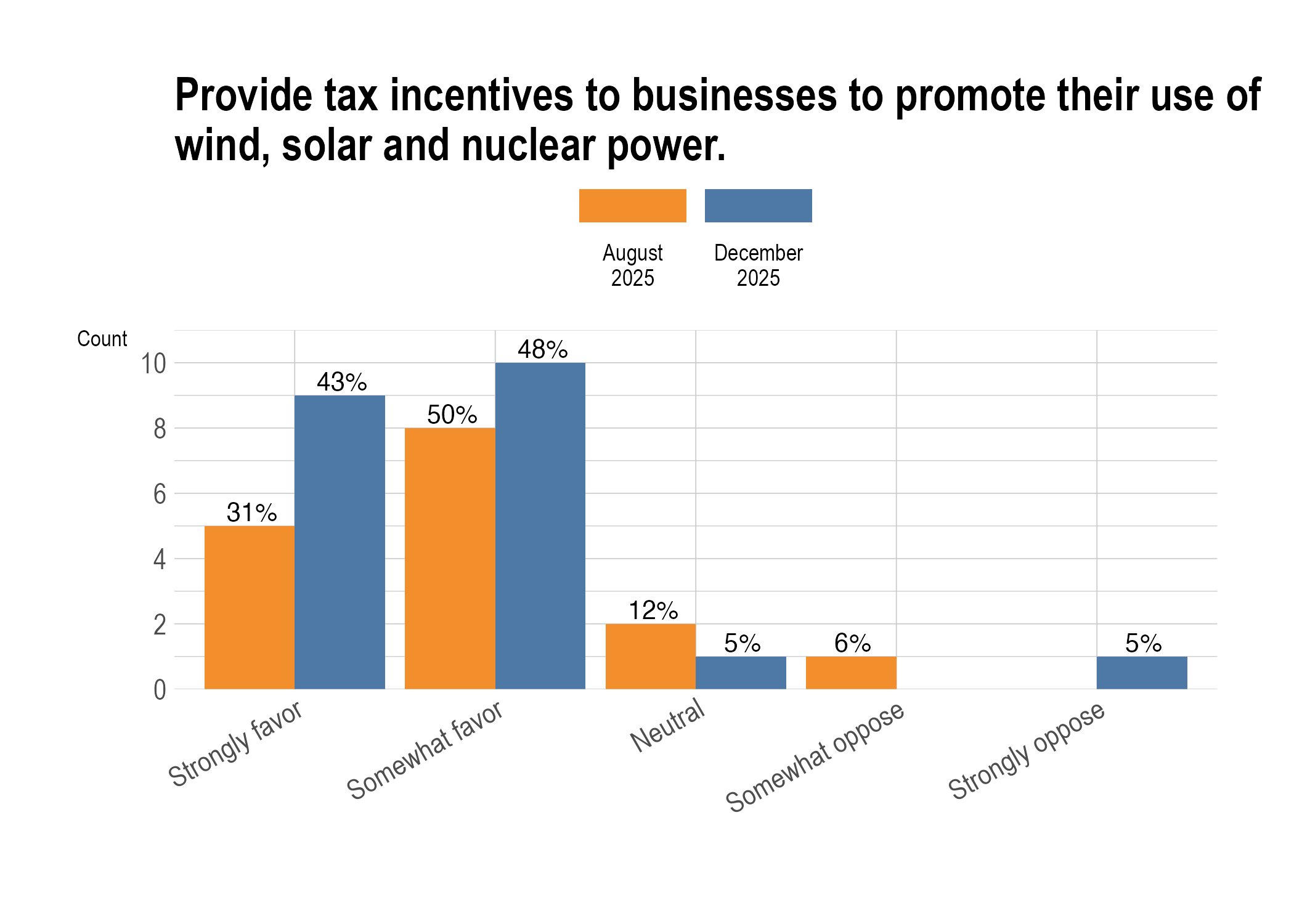
Economists: 63.35% favor
- Before: Our class is 18% more supportive than professional economists.
- After: Our class is 18% more supportive than professional economists.
Policy Support: Home clean‑energy tax credits
Economists: 61.26% favor
- Before: Our class is 20% more supportive than professional economists.
- After: Our class is 39% more supportive than professional economists.
Policy Support: EV purchase tax credits
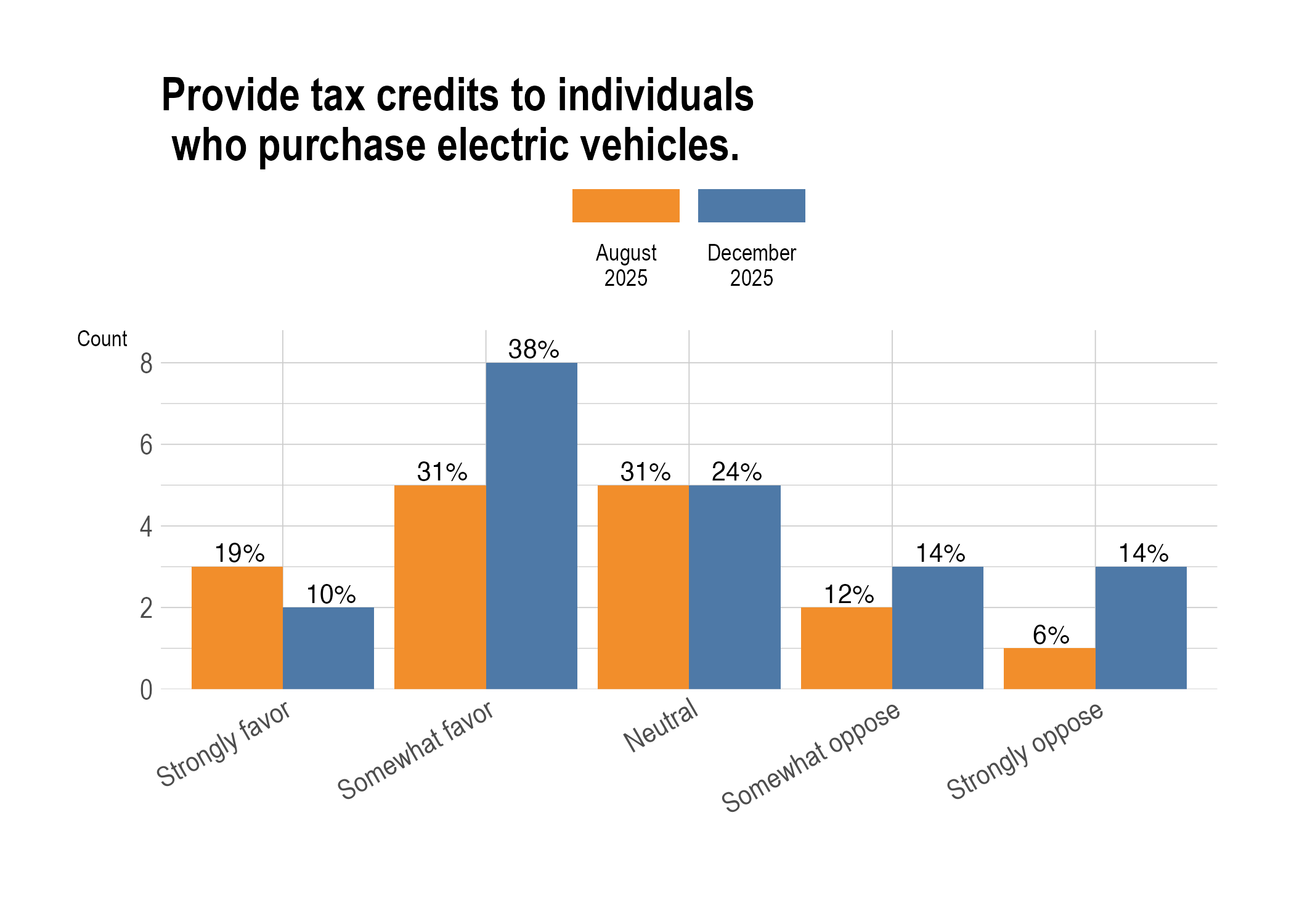
Economists: 51.85% favor
- Before: Our class is as supportive as professional economists.
- After: Our class is as supportive as professional economists.
Agree: EJ regulation should be implemented
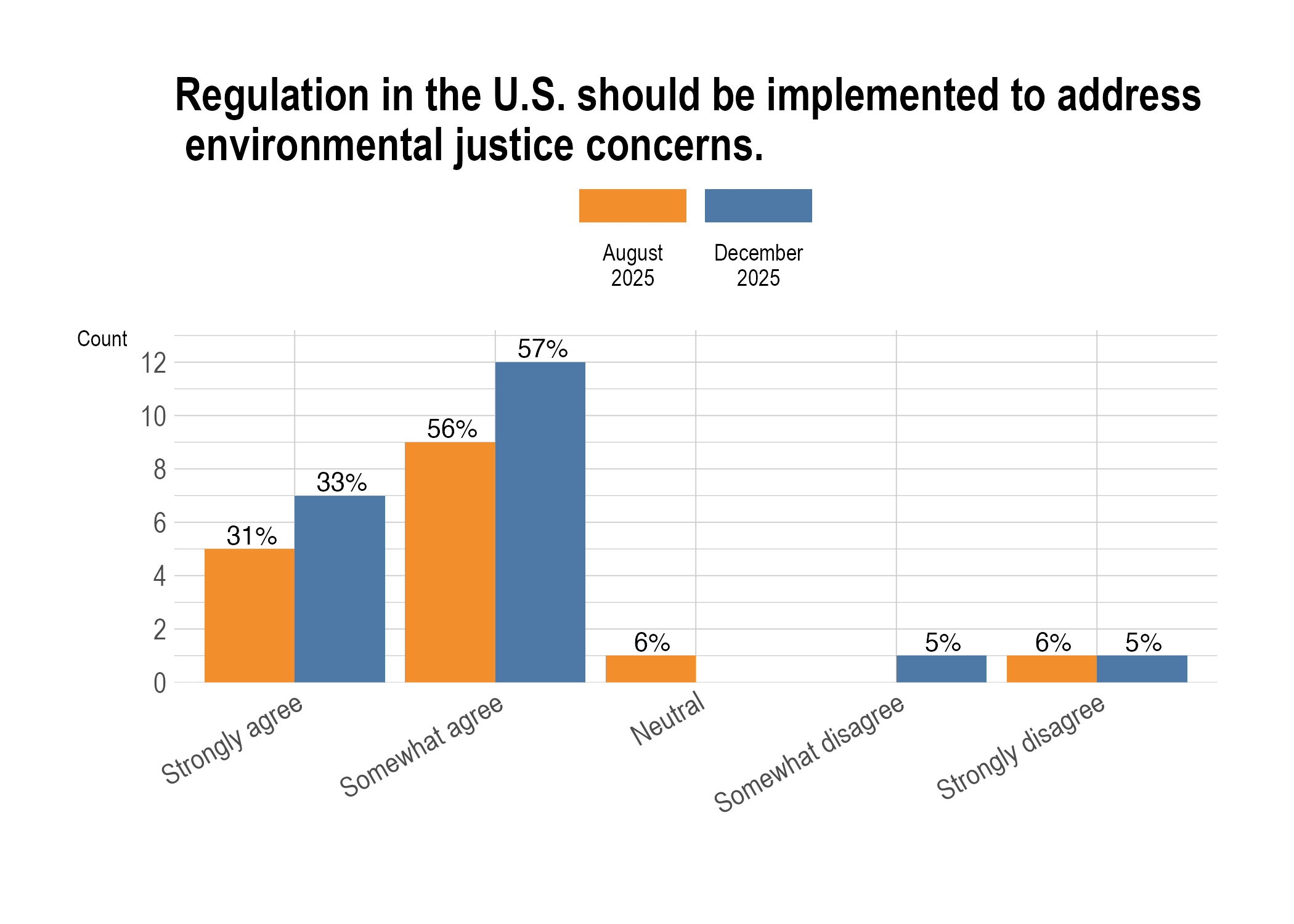
Economists: 81.15% agree
- Before: Our class is 6% more supportive than professional economists.
- After: Our class is 9% more supportive than professional economists.
Agree: Reduce EPA regulatory power improves efficiency
Economists: 80.63% disagree
- Before: Our class is 42% less disagreement than professional economists.
- After: Our class is 24% less disagreement than professional economists.
Agree: Communities near hazardous waste sites are aware/accepting
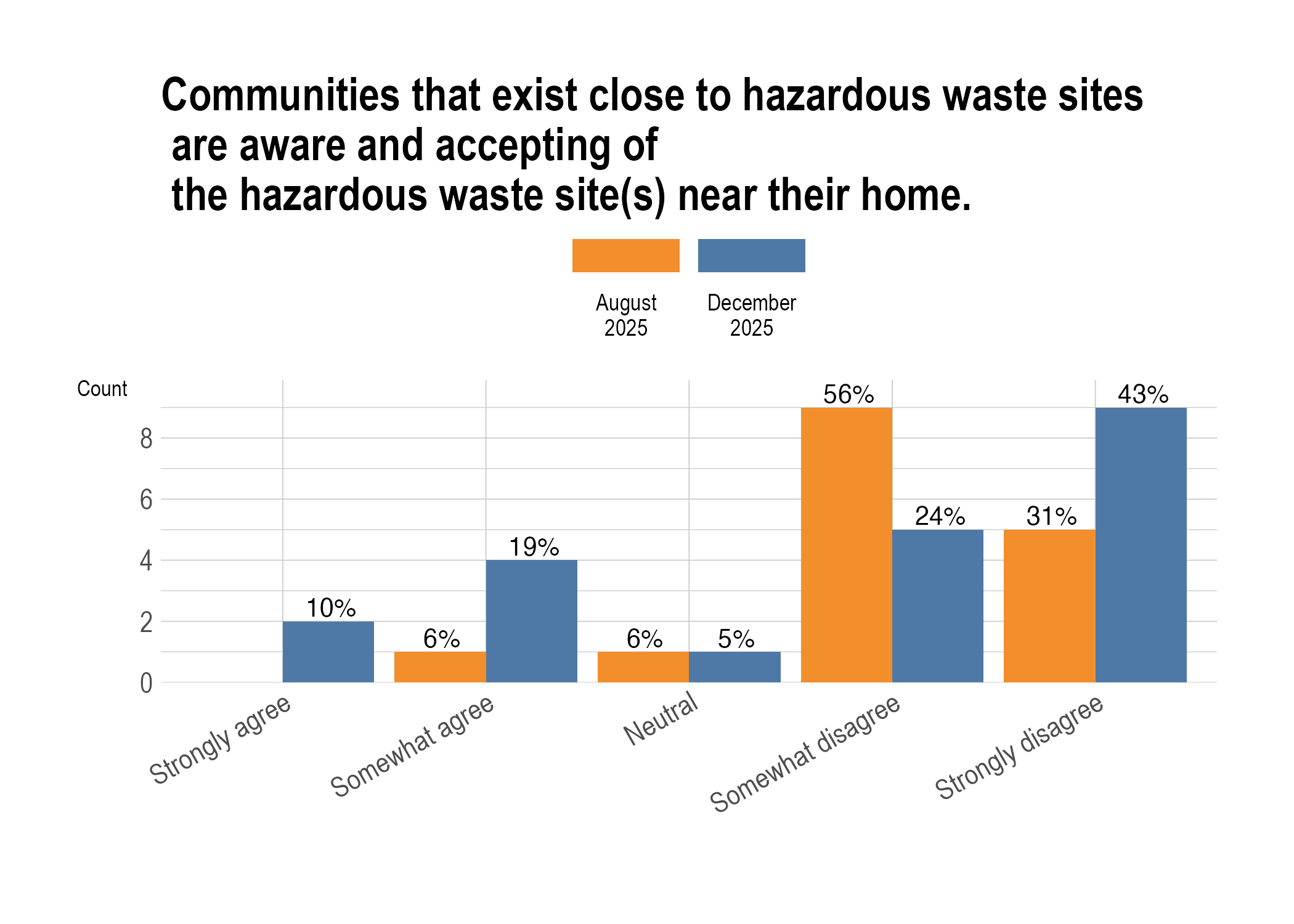
Economists: 75.39% disagree
- Before: Our class is 12% more supportive than professional economists.
- After: Our class is as supportive as professional economists.
Agree: Free market / property rights / tort law are best tools
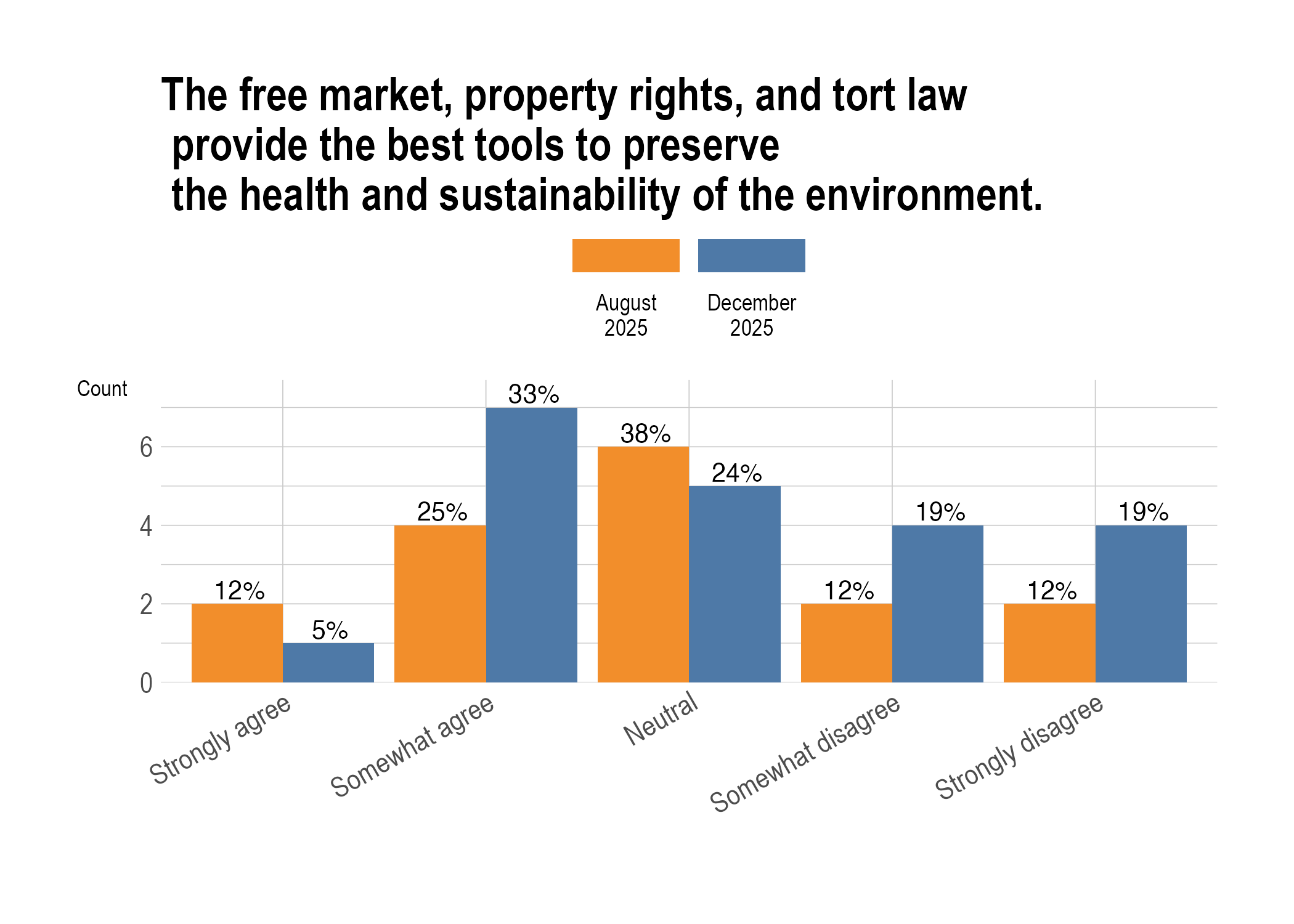
Economists: 73.44% disagree
- Before: Our class is 49% less disagreement than professional economists.
- After: Our class is 25% less disagreement than professional economists.
Agree: Economic growth always harms the environment
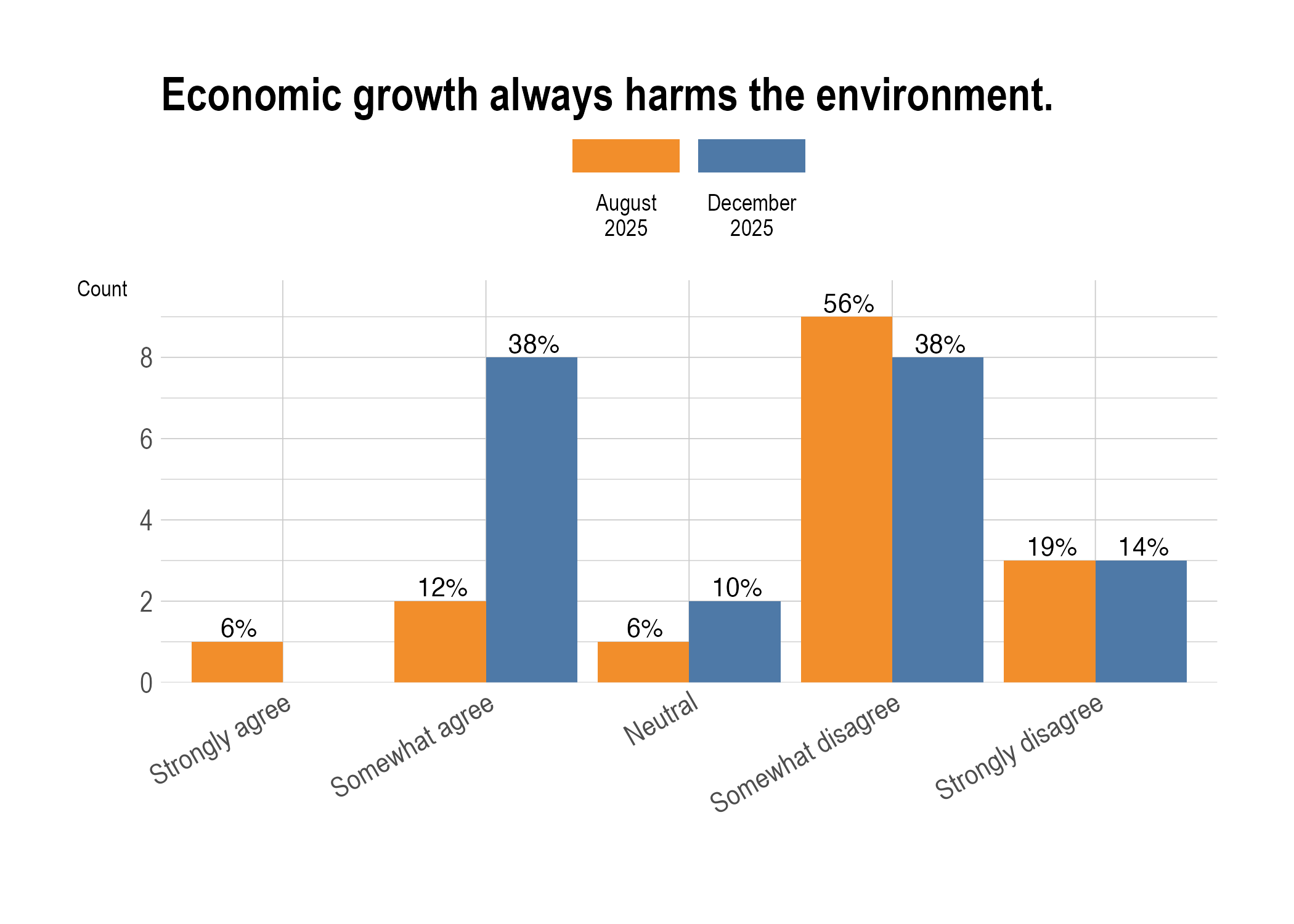
Economists: 70.16% disagree
- Before: Our class is 5% more disagreement than professional economists.
- After: Our class is 18% more disagreement than professional economists.
Agree: Carbon markets and offsets are efficient for firms
Economists: 56.84% agree
- Before: Our class is 26% less supportive than professional economists.
- After: Our class is 24% more supportive than professional economists.
Agree: Return carbon revenues via dividends / lower taxes
Economists: 55.5% agree
- Before: Our class is 32% less supportive than professional economists.
- After: Our class is 15% more supportive than professional economists.
Agree: Use carbon revenues to reduce national debt
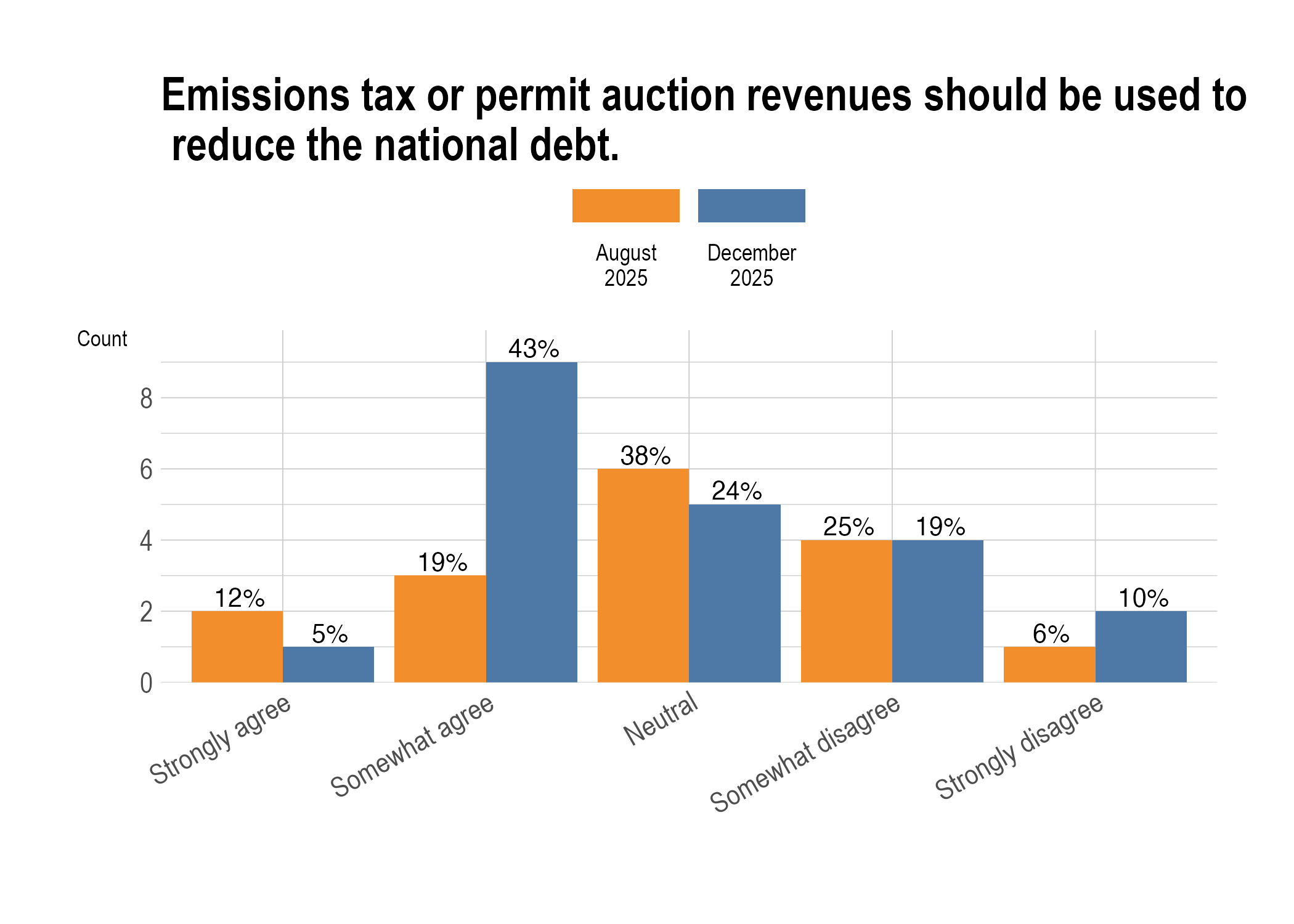
Economists: 42.63% neutral
- Before: Our class is 5% less neutral than professional economists.
- After: Our class is 17% less neutral than professional economists.
Agree: Emission standards are rigid / insensitive to differences
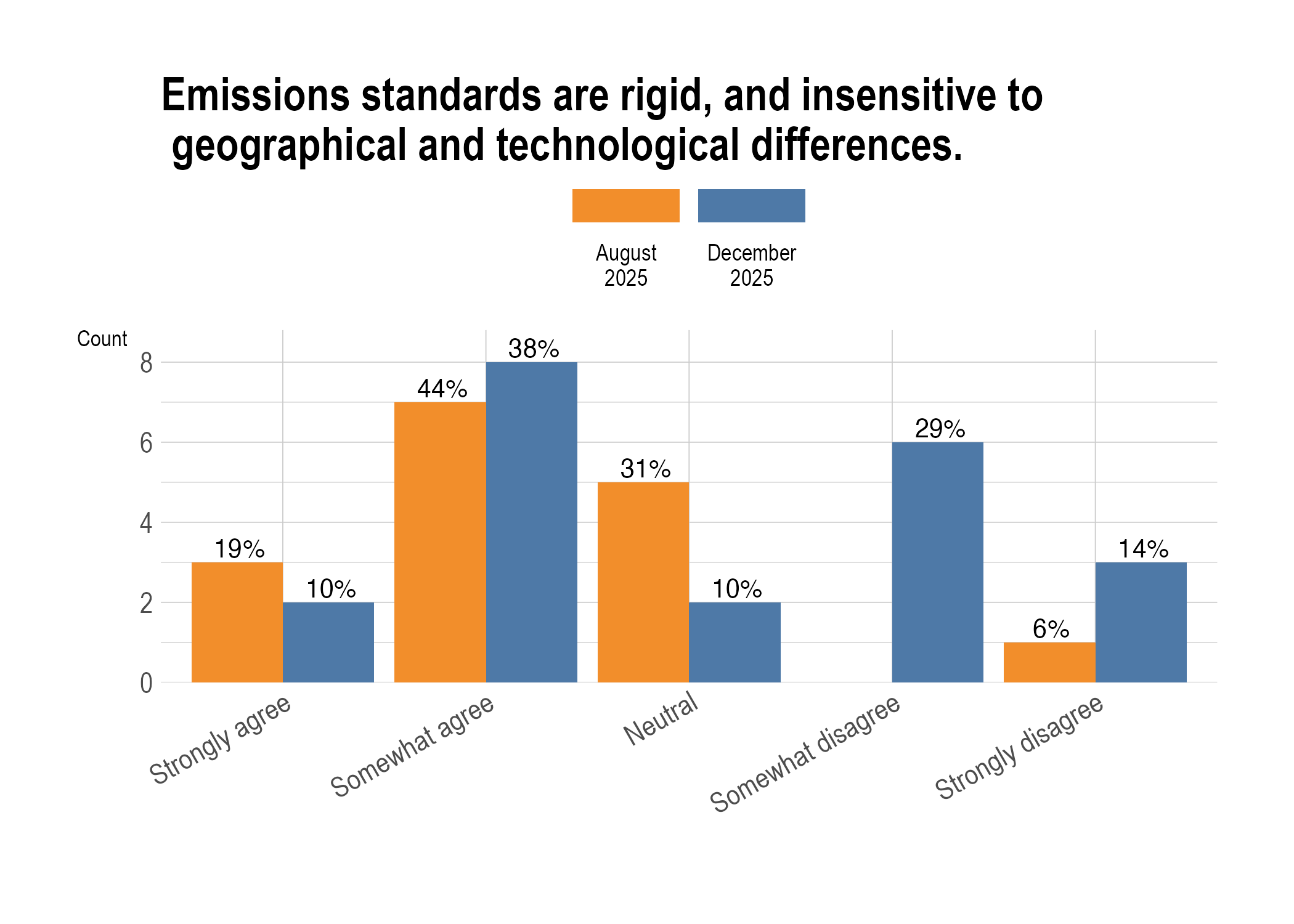
Economists: 49.74% agree
- Before: Our class is 13% more supportive than professional economists.
- After: Our class is as supportive as professional economists.
Agree: Max sustainable level of economic growth exists
Economists: 44.21% agree
- Before: Our class is 12% more supportive than professional economists.
- After: Our class is 37% more supportive than professional economists.
Agree: Population growth degrades the environment
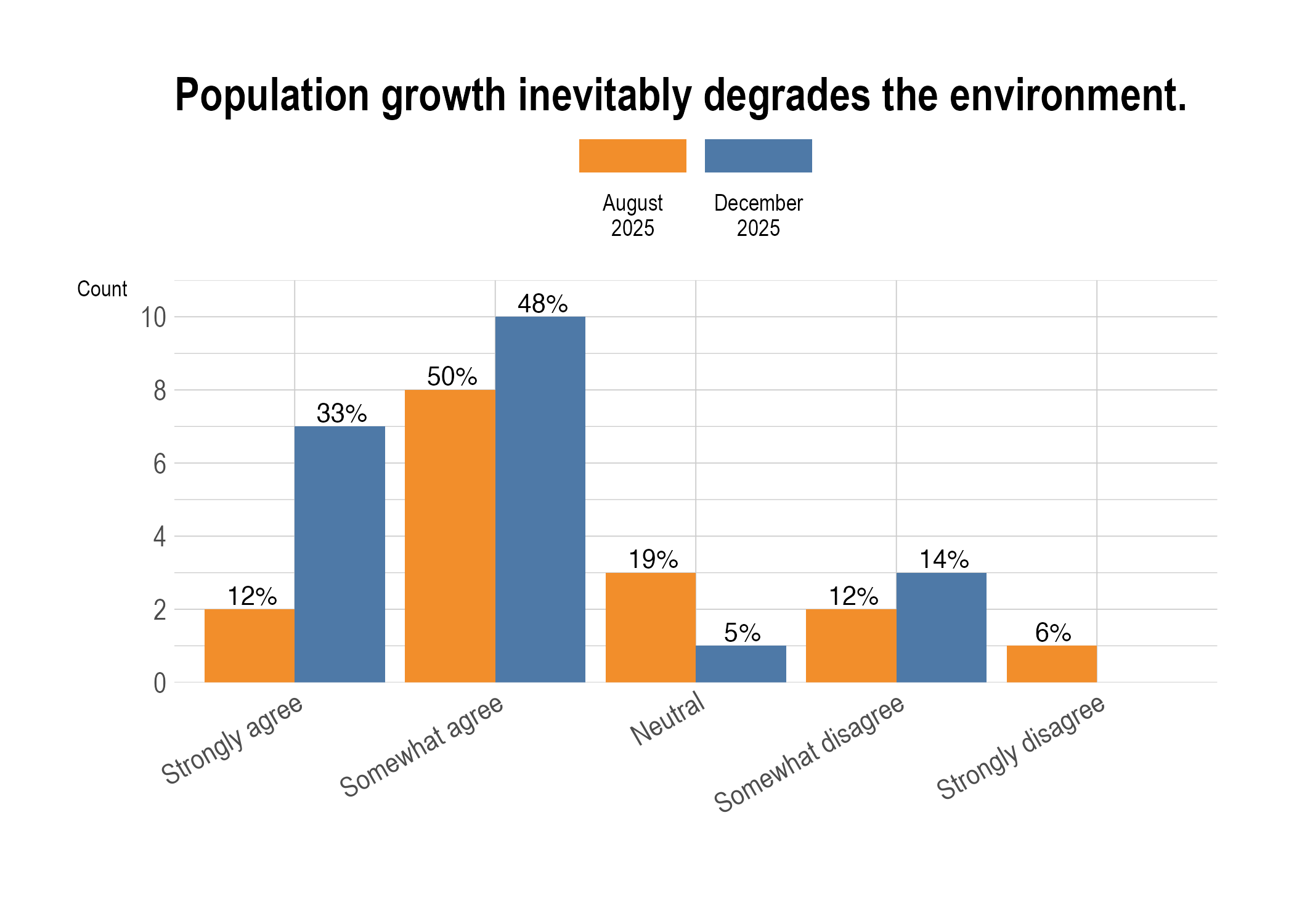
Economists: 41.58% disagree
- Before: Our class is 24% less disagreement than professional economists.
- After: Our class is 28% less disagreement than professional economists.